

Chicken Kabobs in the Oven: Easy Baked Recipe & Timing Guide
Chicken kabobs in the oven are one of the most reliable ways to get tender, well-seasoned chicken and vegetables on the table without relying on a grill. This method works year-round, requires no outdoor equipment, and produces consistent results as long as a few key steps are followed. This guide covers exact temperatures and times, skewer preparation, a Middle Eastern-style marinade, and troubleshooting for the most common problems that come up when baking kabobs indoors.
Quick Answer: Bake chicken kabobs at 400°F for 18 to 22 minutes, or until the internal temperature reaches 165°F. A 1 to 2 minute broil at the end adds light charring. Times will shift slightly at 375°F or 450°F, covered in the table below.
Why Bake Chicken Kabobs Instead of Grilling
Oven baking produces a texture and flavor close to grilling, especially when the broiler is used at the end of cooking. There’s no need for outdoor space, charcoal, or propane, and cleanup is limited to a single sheet pan.
Indoor baking also gives more consistent results than grilling. Oven temperature stays steady, while grill temperature can vary based on wind, fuel level, and hot spots on the grates.
Cutting the chicken and vegetables into uniform, similarly sized pieces is one of the most important steps for even cooking. Pieces that are too small will dry out before the larger pieces finish cooking.
Equipment Needed
Metal vs. Wooden Skewers
Both metal and wooden skewers work for oven-baked kabobs, but they behave differently under heat.
| Feature | Metal Skewers | Wooden Skewers |
|---|---|---|
| Soaking required | No | Yes, 30 minutes minimum |
| Heat conduction | Heats from the inside out, speeding cooking slightly | No internal heat conduction |
| Reusability | Reusable | Single-use |
| Burn risk | None | Can char or burn near the broiler if not soaked |
| Best for | Repeated use, faster cooking | One-time use, disposable cleanup |
If wooden skewers are used, they need to soak in water for at least 30 minutes before assembly. This prevents the exposed wood from scorching, particularly during the broiling step.
Baking Sheet Setup
Line a rimmed baking sheet with foil or parchment for easier cleanup. Arrange the skewers in a single layer with space between each one. Skewers that touch will steam instead of bake, which slows browning and can leave the exterior pale and soft instead of lightly browned.
How to Cook Chicken Kabobs in the Oven
- Make the marinade. Whisk together the olive oil, lemon juice, garlic, cumin, paprika, salt, and pepper in a large bowl.
- Marinate the chicken. Add the cubed chicken to the marinade and toss to coat. Cover and refrigerate for at least 30 minutes, up to 12 hours.
- Prepare the skewers. If using wooden skewers, soak them in water for 30 minutes before assembly.
- Assemble the skewers. Thread chicken, bell pepper, and onion pieces onto the skewers, alternating as desired. Leave a small gap at each end for handling.
- Arrange on the baking sheet. Place the skewers in a single layer, spaced at least an inch apart.
- Bake. Cook at 400°F for 18 to 22 minutes, flipping once halfway through.
- Broil (optional). Switch to broil for 1 to 2 minutes to add light charring, watching closely to prevent burning.
- Check doneness and rest. Confirm the internal temperature has reached 165°F, then let the kabobs rest for 5 minutes before serving.
How Long to Cook Chicken Kabobs in the Oven
Cooking time depends on oven temperature, chicken piece size, and whether a broil step is added at the end. The table below outlines the most commonly used oven temperatures for this recipe.
Cooking Times by Oven Temperature
| Oven Temperature | Bake Time | Broil (Optional) |
|---|---|---|
| 375°F | 25 to 28 minutes | 1 to 2 minutes |
| 400°F | 18 to 22 minutes | 1 to 2 minutes |
| 425°F | 15 to 18 minutes | 1 to 2 minutes |
| 450°F | 12 to 15 minutes | 1 minute |
Higher temperatures cook the kabobs faster but leave a smaller margin for error before the chicken dries out. Lower temperatures take longer but tend to produce more evenly cooked, juicier results, especially for larger cubes of chicken.
How to Check for Doneness
The most reliable way to check doneness is with an instant-read meat thermometer inserted into the center of the largest piece of chicken. It should read 165°F.
Visual cues, such as the chicken turning opaque and juices running clear, can support this check but shouldn’t replace it. Chicken can appear done on the outside while still being undercooked in the center, particularly with thicker cubes.
Tips for Evenly Cooked, Tender Kabobs
- Cut chicken and vegetables into similar sizes. Uneven pieces cook at different rates, leading to some pieces being overdone while others are underdone.
- Leave space between skewers on the pan. Crowding traps steam and prevents browning.
- Marinate for at least 30 minutes. Marinating any less than this limits flavor absorption; marinating longer than 12 hours can begin to break down the texture of the chicken, especially with acidic marinades.
- Flip halfway through baking. This promotes even browning on both sides.
- Let the kabobs rest for 5 minutes after baking. Resting allows the juices to redistribute through the meat instead of running out when cut into.
Troubleshooting Common Problems
Chicken Is Undercooked at the Recommended Time
Oven temperatures can vary by 15 to 25 degrees from the display setting, even in newer ovens. An oven thermometer placed on the center rack can confirm actual temperature.
Piece size also affects timing directly. Cubes larger than 1 inch will need additional time beyond what’s listed in the table above.
Vegetables Are Overcooked Before the Chicken Finishes
Bell peppers and onions cook faster than chicken and can turn soft or blackened before the chicken reaches 165°F. Cutting vegetables slightly larger than the chicken pieces helps balance the cooking time between the two.
Alternating vegetables with chicken rather than clustering them together on one section of the skewer also helps distribute heat more evenly.
Skewers Are Burning Under the Broiler
This typically happens when wooden skewers haven’t soaked long enough, or when the pan sits too close to the broiler element. Soaking wooden skewers for the full 30 minutes, and positioning the pan 6 inches from the heat source, reduces this risk.
Metal skewers eliminate this issue entirely, since there’s no exposed wood to catch under direct heat.
Variations
Middle Eastern-Style Marinade
The cumin, paprika, garlic, and lemon marinade used in this recipe reflects common flavor profiles found in Middle Eastern kebab recipes. For a different flavor direction, olive oil can be swapped for plain yogurt to create a thicker, tangier marinade that also helps tenderize the chicken.
Vegetable Substitutions
Zucchini, mushrooms, and cherry tomatoes can replace or supplement the bell pepper and onion. These vegetables cook at a similar rate to peppers and onions, so no adjustment to bake time is needed.
Cooking Without Skewers
Chicken kabobs in the oven can also be made without skewers by spreading the marinated chicken and vegetables directly on a lined baking sheet in a single layer. This sheet-pan method uses the same temperature and timing guidelines listed above and is a practical option when skewers aren’t available.
What to Serve with Chicken Kabobs
- Rice or another cooked grain, such as quinoa or couscous
- Warm pita bread
- A yogurt-based sauce, such as tzatziki
- A simple green salad or a chopped cucumber and tomato salad
Storage and Reheating
Refrigerating
Store cooled chicken kabobs in an airtight container in the refrigerator for up to 3 days. Removing the meat and vegetables from the skewers before storing makes reheating easier.
Freezing
Chicken kabobs can be frozen for up to 3 months. Remove the chicken and vegetables from the skewers first and store them in a freezer-safe container or bag. Thaw in the refrigerator overnight before reheating.
Reheating
To reheat in the oven, place the chicken and vegetables on a lined baking sheet and warm at 350°F for 10 to 12 minutes, or until heated through. A microwave can also be used in 30-second increments, though the texture will be softer than oven reheating.
Frequently Asked Questions
Can you cook chicken kabobs in the oven without a grill?
Yes. Baking is a fully effective method for cooking chicken kabobs and doesn’t require any grilling equipment. A broil step at the end can replicate some of the charring typically associated with grilling.
How long do chicken kabobs take at 375°F?
At 375°F, chicken kabobs typically take 25 to 28 minutes to reach an internal temperature of 165°F, followed by an optional 1 to 2 minute broil.
Do wooden skewers need to be soaked before baking?
Yes. Wooden skewers should soak in water for at least 30 minutes before use to prevent burning, particularly if a broil step is included.
What internal temperature should chicken kabobs reach?
Chicken kabobs should reach an internal temperature of 165°F, measured with an instant-read thermometer inserted into the thickest piece of chicken.
Can chicken kabobs be made without skewers?
Yes. The same chicken and vegetables can be spread on a lined baking sheet and baked using the same time and temperature guidelines, without threading them onto skewers.
Can chicken kabobs be cooked in an air fryer?
Chicken kabobs can be adapted for an air fryer, typically at 380°F to 400°F for 10 to 12 minutes, though exact timing depends on the air fryer model and the size of the chicken pieces.
How do you keep chicken from drying out in the oven?
Cutting chicken into uniform pieces, avoiding overcooking past 165°F, and letting the kabobs rest for 5 minutes after baking all help retain moisture. Marinating for at least 30 minutes also supports moisture retention during cooking.
What vegetables work best for oven-baked kabobs?
Bell peppers, onions, zucchini, mushrooms, and cherry tomatoes all hold up well to oven baking and cook at a similar rate to one another.
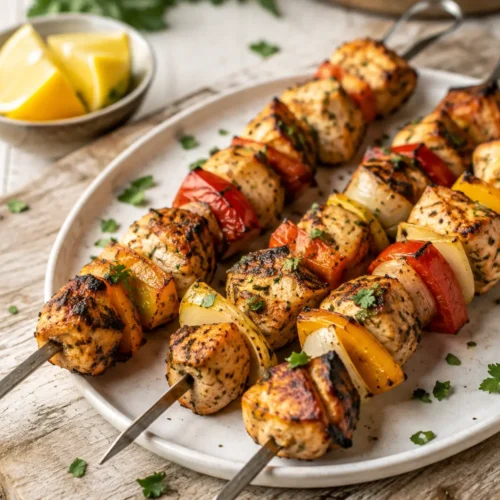
Chicken Kabobs in the Oven
Ingredients
Marinade
- 1/3 cup olive oil extra virgin
- 3 tbsp lemon juice freshly squeezed
- 4 clove garlic minced
- 1 tbsp ground cumin
- 1 tbsp smoked paprika
- 1/2 tsp salt
- 1/4 tsp black pepper
Kabobs
- 2 lb chicken breast or thighs boneless, skinless, cut into 1-inch cubes
- 2 bell peppers cut into 1-inch pieces
- 1 large yellow onion cut into 1-inch pieces
- metal or wooden skewers soak wooden skewers in water for 30 minutes
Instructions
- Whisk together the olive oil, lemon juice, garlic, cumin, paprika, salt, and pepper in a large bowl.
- Add the chicken to the marinade and toss to coat. Cover and refrigerate for at least 30 minutes, up to 12 hours.
- If using wooden skewers, soak them in water for 30 minutes before assembling.
- Preheat the oven to 400°F. Line a baking sheet with foil or parchment.
- Thread the chicken, bell pepper, and onion onto the skewers, alternating pieces.
- Arrange the skewers on the baking sheet in a single layer, spaced at least an inch apart.
- Bake for 18 to 22 minutes, flipping once halfway through, until the internal temperature reaches 165°F.
- For light charring, broil for 1 to 2 minutes at the end, watching closely.
- Let the kabobs rest for 5 minutes before serving.
Notes
- See the Cooking Times by Oven Temperature table earlier in the post for 375°F and 450°F timing adjustments.
- The bell peppers, onion, and skewers rows have no Amount/Unit values since they're counted items rather than measured, just leave those fields blank and put the count in the Name field itself if WPRM requires something in Amount (e.g. "2" in Amount, blank Unit).
- Anything in the Notes row (the second line under each ingredient, like "extra virgin" in your screenshot) is optional in WPRM. It displays as a smaller, italicized line under the ingredient, useful for the cut/prep instructions here.
- Use "Add Ingredient Group" for the "Marinade" and "Kabobs" headers before adding the ingredients under each.
Check Out More:
2 Comments