
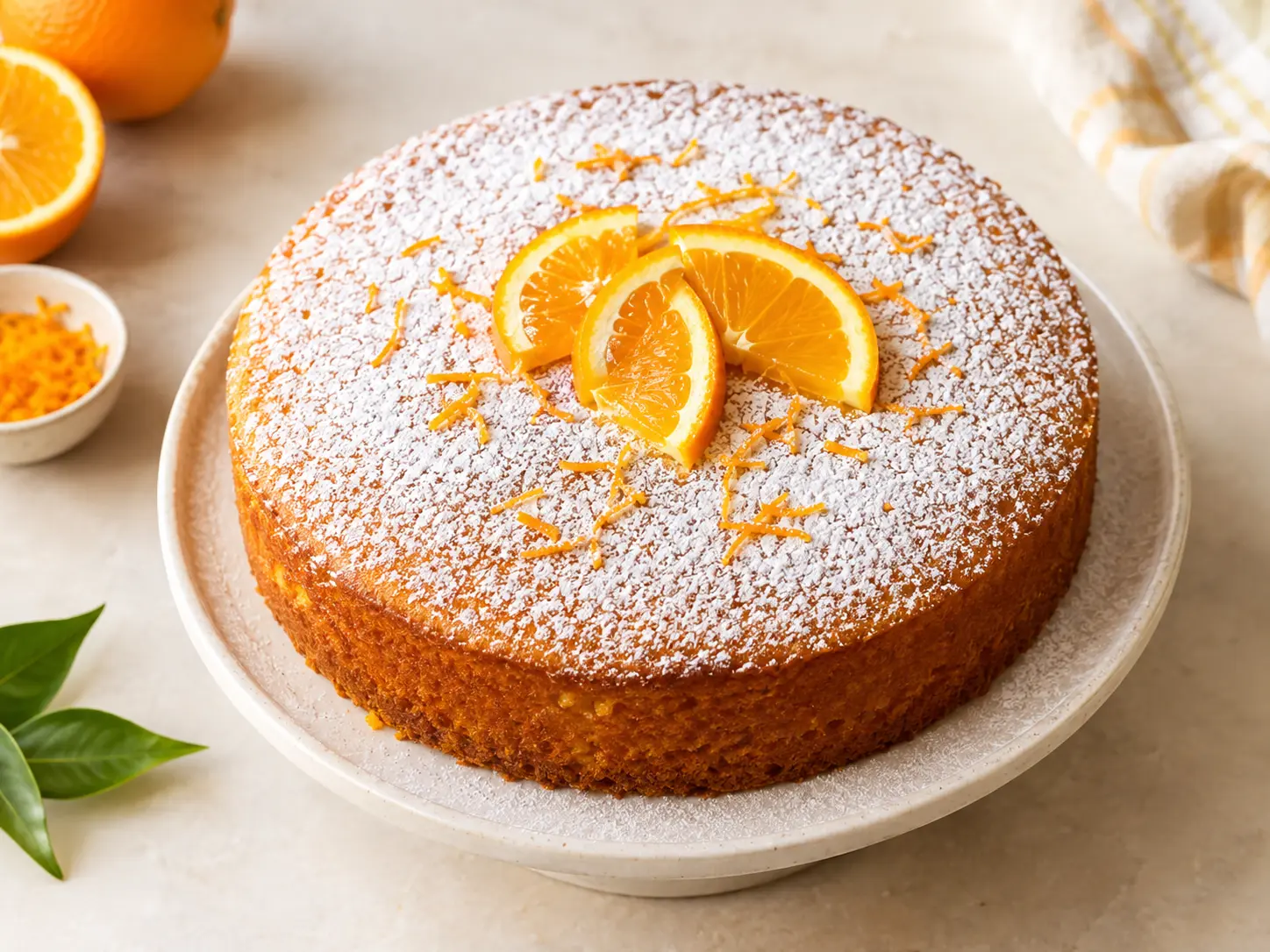
Orange Cardamom Olive Oil Cake (Moist and Easy Recipe)
This orange cardamom olive oil cake pairs bright citrus with warm, fragrant spice in a tender, moist crumb. Extra virgin olive oil replaces butter here, keeping the cake soft for days instead of drying out the next morning. The recipe uses simple pantry staples, one bowl for the wet ingredients and one for the dry, and bakes into a golden, gently domed cake that needs nothing more than a dusting of powdered sugar to finish.
This guide covers the exact recipe, why the orange and cardamom pairing works, ingredient substitutions, how to tell when the cake is done, what to do if something goes wrong, and how to store or freeze it for later.
Why Orange, Cardamom, and Olive Oil Work Together
Cardamom has a warm, slightly citrusy undertone of its own, which is part of why it pairs so naturally with orange instead of competing with it. Where cinnamon or nutmeg can taste heavier next to citrus, cardamom stays light and lets the orange flavor lead.
Olive oil plays a different role than butter in this cake. Because it’s liquid at room temperature, it keeps the crumb moist for longer than a butter-based cake, which tends to firm up and dry out as it cools. A mild, fruity extra virgin olive oil adds a subtle richness without tasting distinctly “olive oil,” while a strong, peppery oil can push the flavor in a more savory direction than most dessert eaters expect.
Ingredients and Substitutions
Ingredient Notes
- Extra virgin olive oil: Choose a mild, fruity oil rather than a robust or peppery one. A strong oil can taste bitter once baked into a sweet cake.
- All-purpose flour: Provides the cake’s structure.
- Ground cardamom: Adds the cake’s signature warm spice. Freshly ground cardamom pods have a more pronounced flavor than pre-ground, but either works.
- Granulated sugar: Sweetens the cake and helps create a tender crumb.
- Eggs: Bind the batter and add richness.
- Orange zest and juice: Zest carries most of the orange flavor; juice adds brightness and reacts with the baking soda to help the cake rise.
- Whole milk: Smooths out the batter and adds moisture.
- Baking powder and baking soda: Work together to give the cake lift.
- Confectioners’ sugar: Used only as a finishing dust, not mixed into the batter.
Ingredient Substitutions
| Ingredient | Substitute | Ratio/Notes |
| Extra virgin olive oil | Neutral oil (avocado, canola, or vegetable) | 1:1, but the cake will lose the subtle fruity olive oil flavor |
| All-purpose flour | 1:1 gluten-free baking blend | 1:1, expect a slightly denser crumb |
| Whole milk | Plant-based milk (oat or almond) | 1:1, texture stays close to the original |
| Ground cardamom | Ground cinnamon | Use the same amount; flavor will be warmer and less citrus-forward |
For a broader look at cardamom swaps in other baked goods, see our guide to cardamom substitutes (once published).
Equipment You’ll Need
- A 9-inch round cake pan or a springform pan, at least 2 inches deep
- Parchment paper, to line the bottom of the pan
- A hand mixer or stand mixer
- Two mixing bowls, one for dry ingredients and one for wet
- A zester or fine grater
A springform pan makes unmolding easier, but because the batter is thin, wrap the bottom in foil or set the pan on a baking sheet to catch any leaks.
How to Make Orange Cardamom Olive Oil Cake
Prepare the Pan and Dry Ingredients
- Position a rack in the center of the oven and preheat to 350°F.
- Brush the bottom and sides of the cake pan with a little olive oil, line the bottom with a round of parchment paper, and dust with flour, shaking out the excess.
- In a medium bowl, whisk together the flour, salt, baking powder, baking soda, and ground cardamom.
Mix the Wet Ingredients
- In a large bowl, combine the sugar, eggs, and orange zest. Beat with a mixer on high speed until thick and pale, about 5 minutes.
- With the mixer running on low, slowly drizzle in the olive oil until fully incorporated.
- Reduce the speed to low and add the orange juice and milk. Beat until smooth.
Combine and Bake
- Add the dry ingredients to the wet ingredients and mix on low just until combined. The batter should look smooth and pourable, with no visible streaks of flour. Avoid overmixing, which can make the cake dense.
- Pour the batter into the prepared pan and sprinkle the remaining sugar over the top.
- Bake for 40 to 45 minutes, checking at the 30-minute mark, until a skewer inserted in the center comes out clean.
Cool and Finish
- Let the cake cool in the pan for 20 to 30 minutes, then run a knife around the edge and invert it onto a rack to cool completely.
- Dust with powdered sugar and sprinkle with reserved orange zest before serving.
How to Tell When It’s Done
A toothpick or skewer inserted into the center should come out clean or with a few dry crumbs, not wet batter. Beyond that test, look for these visual cues:
- The top should be golden brown, not pale
- The edges should have started to pull slightly away from the sides of the pan
- The center should spring back gently when touched, rather than leaving an indent
If the top is browning too quickly while the center is still underbaked, loosely tent the pan with foil and continue baking.
Common Mistakes and Troubleshooting
| Problem | Likely Cause | Fix |
| Dense or gummy crumb | Overmixing after adding the flour, or too much flour packed into the measuring cup | Mix just until no flour streaks remain; spoon and level flour instead of scooping directly from the bag |
| Sunken center | Underbaking, or expired baking powder/soda | Bake until a skewer comes out clean; check that leaveners aren’t past their expiration date |
| Greasy or oily top | Too much oil relative to the other ingredients, or oil added too quickly and not fully emulsified | Drizzle the oil in slowly while mixing, and measure carefully rather than eyeballing |
| Bitter flavor | Olive oil that’s too strong, peppery, or bitter for a sweet application | Use a mild, fruity extra virgin olive oil rather than a robust one |
Storing, Making Ahead, and Freezing
Room Temperature and Refrigerator Storage
Once fully cooled, store the cake covered at room temperature for up to 3 days. It can also be refrigerated, covered, for up to 5 days. Bring refrigerated cake back to room temperature before serving for the best texture.
Make-Ahead for Entertaining
This cake works well made a day in advance. Bake it, let it cool completely, and store it covered at room temperature. Add the powdered sugar dusting and any garnish just before serving so it looks freshly finished.
Freezing Instructions
Wrap the cooled, unfrosted cake tightly in plastic wrap and then foil, and freeze for up to 2 months. Thaw overnight at room temperature before dusting with powdered sugar and serving.
Serving Suggestions
This cake is intentionally not overly sweet, so it pairs well with:
- A dollop of lightly sweetened whipped cream
- A spoonful of plain or vanilla yogurt on the side
- Fresh orange segments or a few thin orange slices as garnish
- More Ways to Enjoy This Cake
The version above is the classic bake, with the orange flavor coming from zest and juice mixed into the batter. Some bakers prefer an upside-down version, where thin orange slices are simmered in a sugar syrup and arranged in the bottom of the pan before the batter is poured over them, creating a decorative caramelized orange layer once the cake is flipped. If that’s the style you’re after, look for our upside-down orange slice cake recipe (once published), which uses a different method from the one here.
Frequently Asked Questions
Can I use a different citrus instead of orange?
Lemon or a mix of lemon and orange zest can work in place of orange, though the flavor will be more tart and less sweet. Keep the same quantity of zest and juice called for in the recipe.
Do I need to peel the cardamom pods, or can I use pre-ground cardamom?
Either works. Pre-ground cardamom is more convenient and reliable for consistent measuring; freshly cracked pods and ground cardamom seeds give a slightly more intense flavor.
Can I make this cake in a bundt pan?
Yes. No changes to the batter are needed. Fill the bundt pan a little over two-thirds full and check for doneness starting around the same 40-minute mark, since bundt pans can bake slightly differently than a round cake pan.
Can I double this recipe?
Yes, but bake it in two separate pans rather than one larger one, since a much bigger volume of batter in a single pan will bake unevenly.
Is this cake very sweet?
No. It’s moderately sweet with the sugar balanced by the citrus and spice, closer to a tea cake than a heavily frosted dessert.




2 Comments