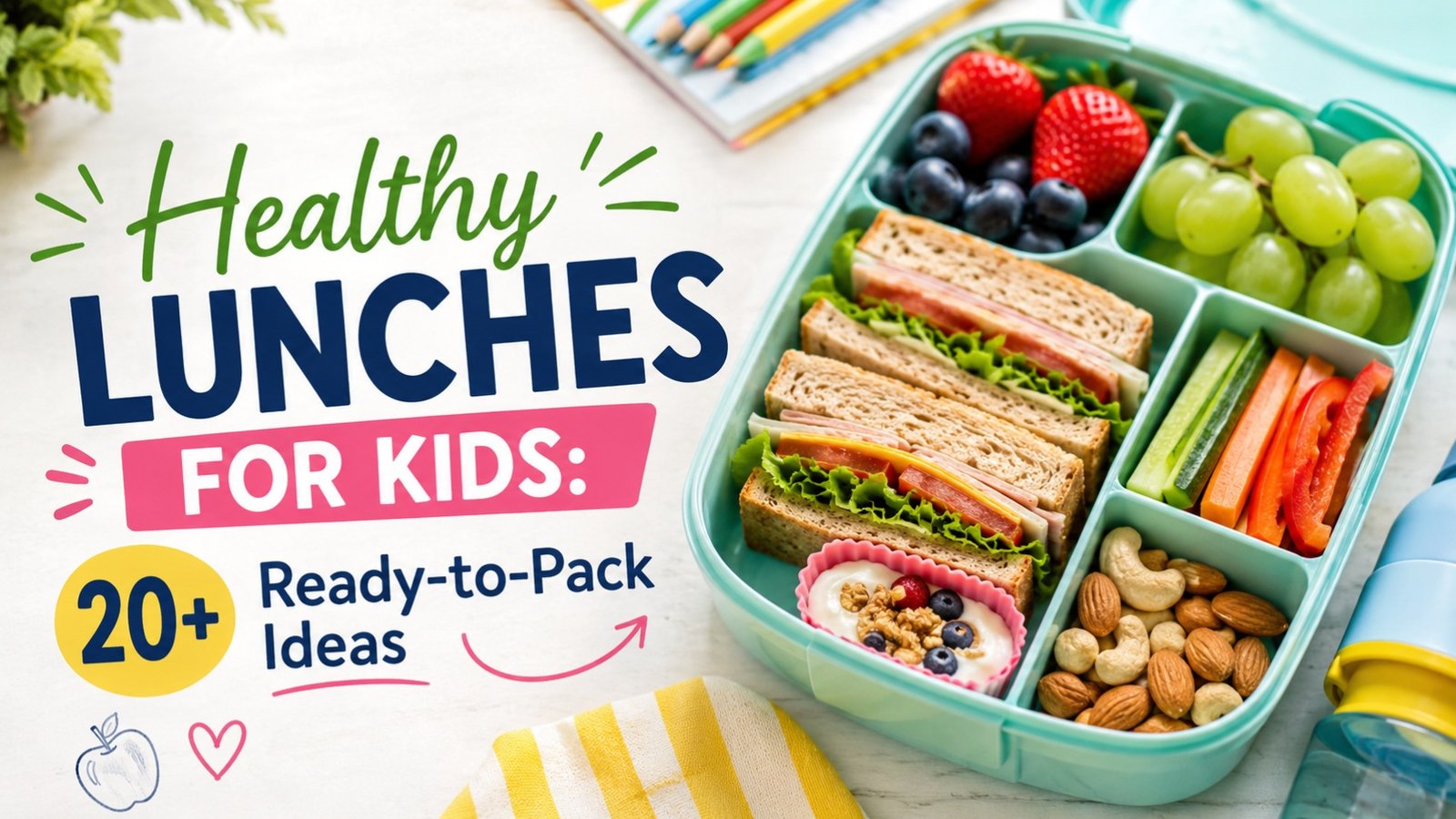
Healthy Lunches for Kids: 20+ Ready-to-Pack Ideas
If you’ve ever stood in front of an open fridge at 7 a.m. with an empty lunchbox and zero ideas, you’re not alone. Packing a healthy lunch for Kids every single school day is one of those tasks that sounds simple until you’re actually the one doing it day after day, for a kid who changes their mind about what they like every other week.
Here’s the good news: you don’t need a nutrition degree or a Pinterest-perfect bento box to pack a genuinely healthy lunch. You just need a simple formula, a rotating list of go-to combos, and a little bit of a system. That’s exactly what this guide gives you more than 20 ready-to-pack lunch ideas, a free 5-day plan, and answers to the questions parents actually ask, like how much food to pack and what to do about allergies or picky eaters.
What Makes a Kids’ Lunch “Healthy”? (The Hunt Recipes Lunchbox Formula)
Most advice about healthy eating overcomplicates things. Strip away the jargon, and a balanced lunch really just needs five things:
Protein + Fruit + Veggie + Grain + Healthy Extra
That’s it. That’s the whole formula. Here’s what each part is actually doing for your kid:
- Protein keeps them full and focused through the afternoon think turkey, eggs, beans, cheese, or hummus.
- A fruit and a veggie round out fiber, vitamins, and hydration. Two different colors is a good rule of thumb.
- A whole grain (bread, crackers, pasta, rice) supplies the steady energy kids need to get through recess, gym class, and everything in between.
- A healthy extra a yogurt, a handful of nuts, or yes, even a small sweet treat rounds things out and keeps lunch from feeling like a chore to eat.
This lines up closely with USDA MyPlate guidance, which recommends filling about half a plate (or lunchbox) with fruits and vegetables, and splitting the rest between protein and grains. You don’t need to measure anything precisely just aim to hit each of the five categories, and you’ve got a genuinely balanced lunch.
How Much Food Should Go in a Kid’s Lunch?
Portion sizes are one of the most common questions parents have, and the honest answer is: it depends on your child’s age and appetite. Here’s a general guide to start from adjust based on how much your own kid actually eats.
Toddlers & preschoolers (ages 2–4) Small portions across all five categories work best think 2–3 tablespoons of protein, a quarter cup of fruit, a quarter cup of veggies, and a small piece of grain. Cut everything into soft, bite-sized pieces to avoid choking hazards (whole grapes, whole nuts, and hard raw veggies should be cut small or avoided at this age).
Elementary schoolers (ages 5–10) Portions roughly double from the toddler range about a half cup of protein, a half to full cup of fruit and veggies combined, and one solid grain serving (a sandwich, a cup of pasta, or a few crackers).
Tweens (ages 11–13) Growth spurts mean bigger appetites. Don’t be afraid to pack more an extra protein source or a bigger grain portion is often needed to keep them full until dinner, especially on sports or activity days.
If your child regularly comes home with an empty lunchbox and says they’re still hungry, that’s usually a sign to bump up the portions particularly the protein and grain.
20+ Healthy Lunch Ideas for Kids (Ready-to-Pack Combos)
Here’s where this guide differs from most “healthy lunch” lists you’ll find: instead of just handing you a pile of ingredients to figure out yourself, every idea below is a complete lunch. Just pack it as-is.
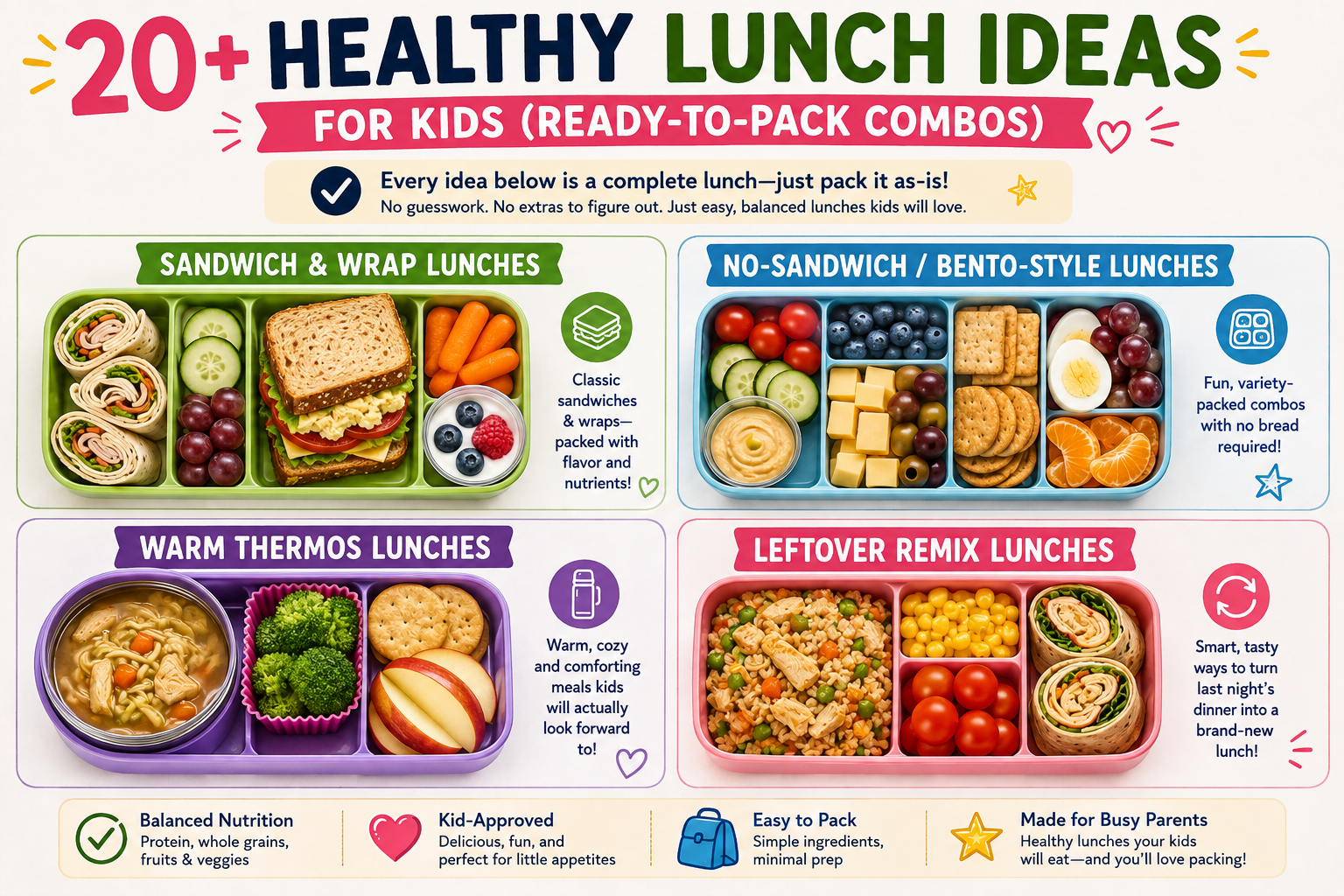
Sandwich & Wrap Lunches
- Turkey & Cheese Roll-Up turkey and cheddar rolled in a whole wheat tortilla, sliced cucumber, a handful of grapes, a small yogurt
- Classic PB&J Upgrade peanut (or sunbutter) and jelly on whole grain bread, baby carrots, apple slices, a few almonds
- Egg Salad Sandwich egg salad on whole grain bread, cherry tomatoes, orange slices, a string cheese
- Hummus & Veggie Wrap hummus, shredded carrot, cucumber, and spinach in a tortilla, a side of berries
- Mini Bagel Sandwich cream cheese and turkey on a mini whole wheat bagel, snap peas, a small apple
No-Sandwich / Bento-Style Lunches
- Rainbow Bento grape tomatoes, orange hummus, shredded cheese, cucumber slices, blueberries
- Protein & Dipper Box hard-boiled eggs, whole grain crackers, carrot sticks, ranch dip, a handful of grapes
- Mediterranean Kid Box cubed feta, olives (pitted), pita triangles, cucumber, a few dried apricots
- DIY Kabobs cheese cubes, deli turkey, cherry tomatoes, and melon on a blunt skewer, with crackers on the side
- Chicken & Rice Box shredded rotisserie chicken, a scoop of rice, steamed edamame, mandarin orange slices
Warm Thermos Lunches
- Pasta Salad whole wheat pasta with white beans, cherry tomatoes, and a light olive oil dressing, packed warm in a thermos
- Mini Meatballs & Marinara with a side of whole grain crackers or a small roll, plus steamed broccoli
- Fried Rice brown rice, scrambled egg, peas, and diced carrot, warmed and packed in a thermos
- Chicken Noodle Soup a kid favorite, packed hot, with a side of crackers and apple slices
- Cheesy Quesadilla Bites cut into wedges, kept warm, served with a small container of salsa or guacamole
Leftover Remix Lunches
- Taco Night Leftovers seasoned ground turkey or beans, shredded cheese, and tortilla chips, with a side of corn
- Roast Chicken Wrap leftover chicken shredded into a wrap with lettuce and a light dressing
- Baked Beans & Veggies with grated cheese stirred in, plus a slice of whole grain bread
- Stir-Fry Rice Bowl leftover stir-fry veggies and protein over rice, packed warm
- Potato Salad Plate a scoop of potato salad, a hard-boiled egg, and a side of cherry tomatoes
Bonus: No-Cook, Zero-Effort Combos
- Yogurt Parfait Lunch Greek yogurt layered with berries and granola, plus a cheese stick and crackers
- Snack-Style Lunch a mix of cubed cheese, whole grain crackers, grapes, and roasted chickpeas (great for days you’re really short on time)
Rotate through these across a few weeks and your child gets real variety which matters more than you might think. It can take up to 10 exposures before a child accepts a new food, so don’t be discouraged if something comes home untouched a few times. Repetition, without pressure, is what eventually works.
Allergy-Friendly Lunch Swaps
Packing for a food allergy doesn’t mean starting from scratch most of the combos above can be adapted with a simple swap.
| Instead of… | Try… |
| Peanut butter | Sunflower seed butter or soy nut butter |
| Regular cheese/yogurt | Dairy-free cheese or coconut/soy yogurt |
| Wheat bread or crackers | Gluten-free bread, rice cakes, or corn-based crackers |
| Nuts (almonds, walnuts) | Roasted chickpeas, pumpkin seeds, or seed-based trail mix |
| Regular pasta | Chickpea, lentil, or gluten-free pasta |
If your child’s school is a nut-free zone (many are), double-check labels on packaged snacks and granola bars “may contain traces” labeling catches a lot of parents off guard.
Free 5-Day Healthy Lunch Plan
Not sure where to start? Here’s a sample week built entirely from the combos above just swap in whatever your kid prefers.
| Day | Lunch |
| Monday | Turkey & Cheese Roll-Up |
| Tuesday | Rainbow Bento |
| Wednesday | Mini Meatballs & Marinara (thermos) |
| Thursday | Taco Night Leftovers |
| Friday | Yogurt Parfait Lunch |
Print this out, stick it on the fridge, and you’ve eliminated the “what do I pack today” decision fatigue for an entire week.
Meal Prep Tips to Make Packing Lunches Faster
The busiest parents don’t have more time than you do they just have a better system. A few tips that make the biggest difference:
- Pick one prep day. Sunday (or whichever day works for your week) is when you wash and chop all your fruits and veggies for the week ahead. Store them in clear containers at eye level in the fridge so they’re easy to grab.
- Build a “lunch basket.” Keep a designated bin in the pantry with pre-portioned snacks crackers, trail mix, granola bars so you’re never digging through cabinets at 7 a.m.
- Double up at dinner. Cooking extra chicken, pasta, or rice at dinner means tomorrow’s lunch is already half-done.
- Pack the night before. Even just assembling everything and leaving it in the fridge overnight saves precious morning minutes and lets your child help choose what goes in.
- Keep it cold. An ice pack or a frozen water bottle in the lunchbox keeps perishables safe until lunchtime, especially in warmer months.
Tips for Picky Eaters
If you’re dealing with a picky eater, you already know that a beautifully balanced lunch means nothing if it comes home untouched. A few things that genuinely help:
- Pair new foods with familiar favorites. Don’t make a new food the star of the lunchbox tuck a small portion next to something you already know they’ll eat.
- Let them help build it. Kids are far more likely to eat something they picked out or helped assemble themselves.
- Keep portions small for new foods. A tablespoon of something unfamiliar feels far less intimidating than a full serving.
- Don’t take it personally. An uneaten lunch isn’t a failure it’s data. Notice what keeps coming back untouched and quietly rotate it out.
Frequently Asked Questions
What is a healthy lunch for a 7-year-old?
A balanced lunch for a 7-year-old should include a protein (like turkey or cheese), a fruit, a vegetable, a whole grain, and a small extra like yogurt roughly a half cup portion of each, adjusted to your child’s appetite.
How do I make my kid’s lunch more balanced?
Use the five-category formula protein, fruit, veggie, grain, and a healthy extra as a quick mental checklist each time you pack. If you’re hitting most of those categories most days, you’re doing well.
What are quick healthy lunches for Kids with no cooking?
Yogurt parfaits, cheese-and-cracker boxes, hummus with veggies, and pre-made wraps are all no-cook options that come together in under five minutes.
How do I keep my kid’s lunch cold until lunchtime?
Pack an ice pack or a frozen water bottle alongside perishable items, and choose an insulated lunchbox both make a real difference, especially for anything with dairy or meat.
What’s a good nut-free lunch for school?
Turkey and cheese roll-ups, egg salad sandwiches, hummus and veggie wraps, or a rainbow bento box are all naturally nut-free and easy to pack for schools with nut restrictions.
Packing a healthy lunch every day doesn’t have to be a daily guessing game. With a simple formula, a rotating list of go-to combos, and a system that works for your family, it becomes just another part of the routine one your kids will actually look forward to opening.
2 Comments