
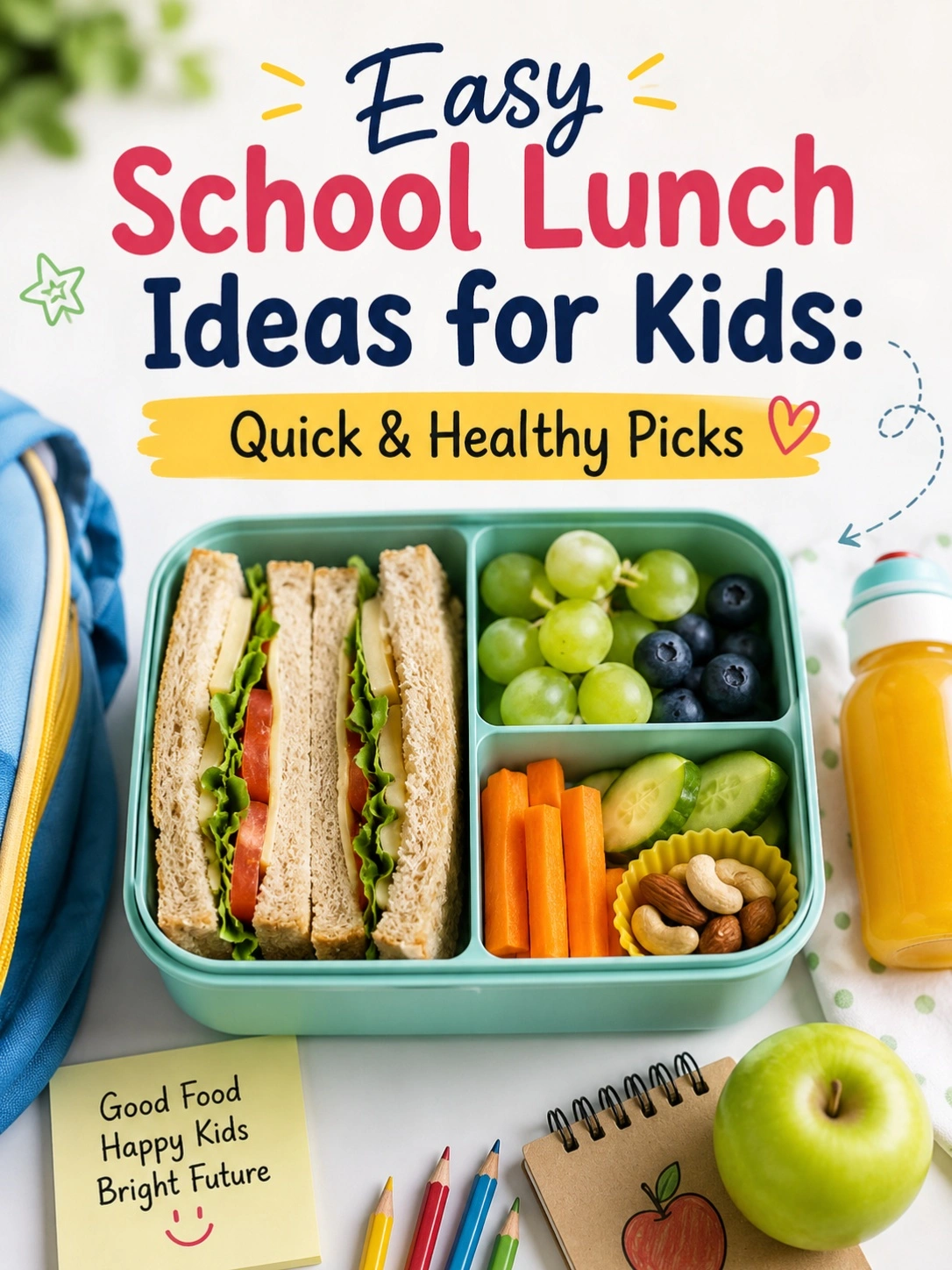
Easy School Lunch Ideas for Kids: 50+ Quick & Healthy Picks
Looking for easy school lunch ideas for kids that don’t take all morning to put together? Packing school lunches is one of those jobs that never really ends. It’s every single weekday, for nine months straight, and by October most of us are running out of ideas. If you’re staring into the fridge at 7 a.m. wondering what on earth to put in the lunchbox again, you’re not alone.
I’ve spent years packing lunches for picky eaters, adventurous eaters, and everyone in between, and the truth is you don’t need forty different recipes. You need a handful of reliable categories you can rotate through: cold lunches, wraps, no-cook options, and a few kid-made favorites, so you’re never starting from scratch. Below you’ll find over 50 easy school lunch ideas for kids, organized exactly that way.
Easy School Lunch Ideas for Kids: 5-Minute, No-Cook Options
When mornings are tight, these are the lunches that come together without turning on the stove. Keep the ingredients for a few of these stocked at all times, and you’ll never be stuck.
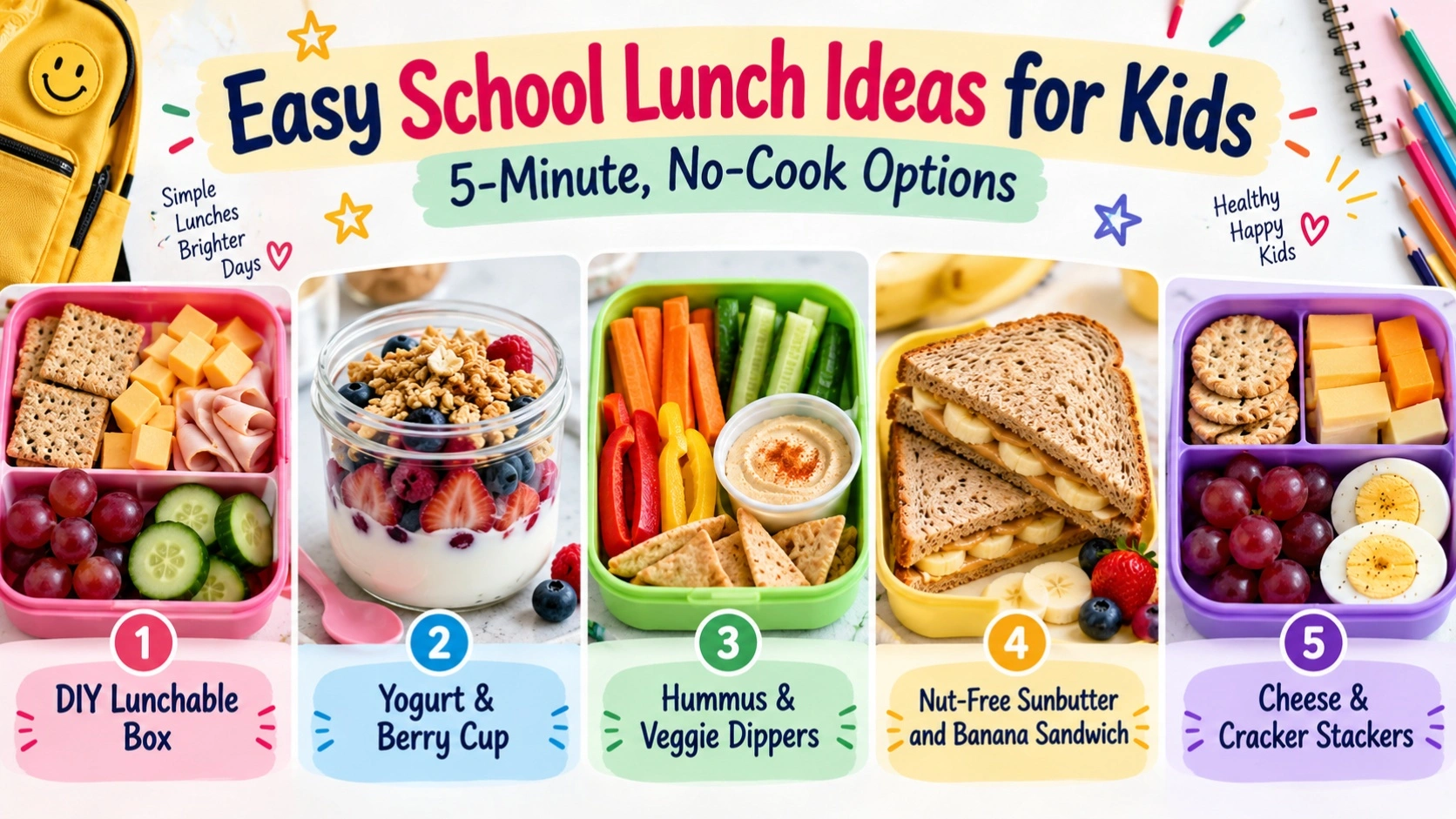
- DIY Lunchable Box: Whole-grain crackers, cheese cubes, and sliced deli turkey or ham, arranged in a divided container so nothing touches. Kids get to build their own bites, choosing how many crackers go with each piece of cheese, which almost always means the lunch actually gets eaten instead of coming home half-touched. It’s also endlessly customizable, swap in salami, different cheeses, or crunchy chickpeas depending on what’s in the fridge that week.
- Yogurt & Berry Cup: Plain or vanilla yogurt layered with fresh or frozen (thawed) berries and a scoop of granola, packed separately in a small container so the granola stays crunchy until lunchtime instead of turning soggy. This one doubles as a mini dessert and a source of protein and calcium, and it takes under two minutes to layer the night before. A drizzle of honey on top makes it feel a little more special without adding much sugar.
- Hummus & Veggie Dippers: Carrot sticks, cucumber rounds, and bell pepper strips arranged around a small container of hummus or ranch for dipping. Cutting the vegetables into thin, uniform sticks the night before makes this a genuinely fast morning assembly, and rotating the dip (hummus one week, tzatziki or ranch the next) keeps it from feeling repetitive. Adding a few pita chips or pretzel sticks rounds it out into a fuller meal.
- Nut-Free Sunbutter and Banana Sandwich: A classic swap for schools with nut-free policies; sunbutter has a similar creamy texture and slightly nutty flavor that most kids accept without noticing much difference. Layer thin banana slices directly on the sunbutter so they don’t slide out, and use whole-grain bread for extra fiber. This sandwich also holds up well if it sits in a lunch bag for a few hours, since banana browns slower when pressed between two layers of sunbutter.
- Cheese & Cracker Stackers: Sliced cheese, whole-grain crackers, and grapes for a snack-style lunch that needs zero prep beyond slicing the cheese. This is the lunch to lean on during the busiest weeks, since everything can be tossed into a container straight from the fridge with no cutting boards or cooking involved. Add a hard-boiled egg (made ahead in a batch on Sunday) to boost the protein if your child needs something more filling.
Nut-free note: many of the no-cook ideas above are easy to keep nut-free by swapping peanut butter for sunbutter or soy butter, worth checking your school’s specific policy, since rules vary by district.
Cold Lunch Ideas Kids Actually Eat
Cold lunches don’t have to mean a boring sandwich. These hold up well in an insulated lunch bag and taste just as good at noon as they did at 7 a.m.
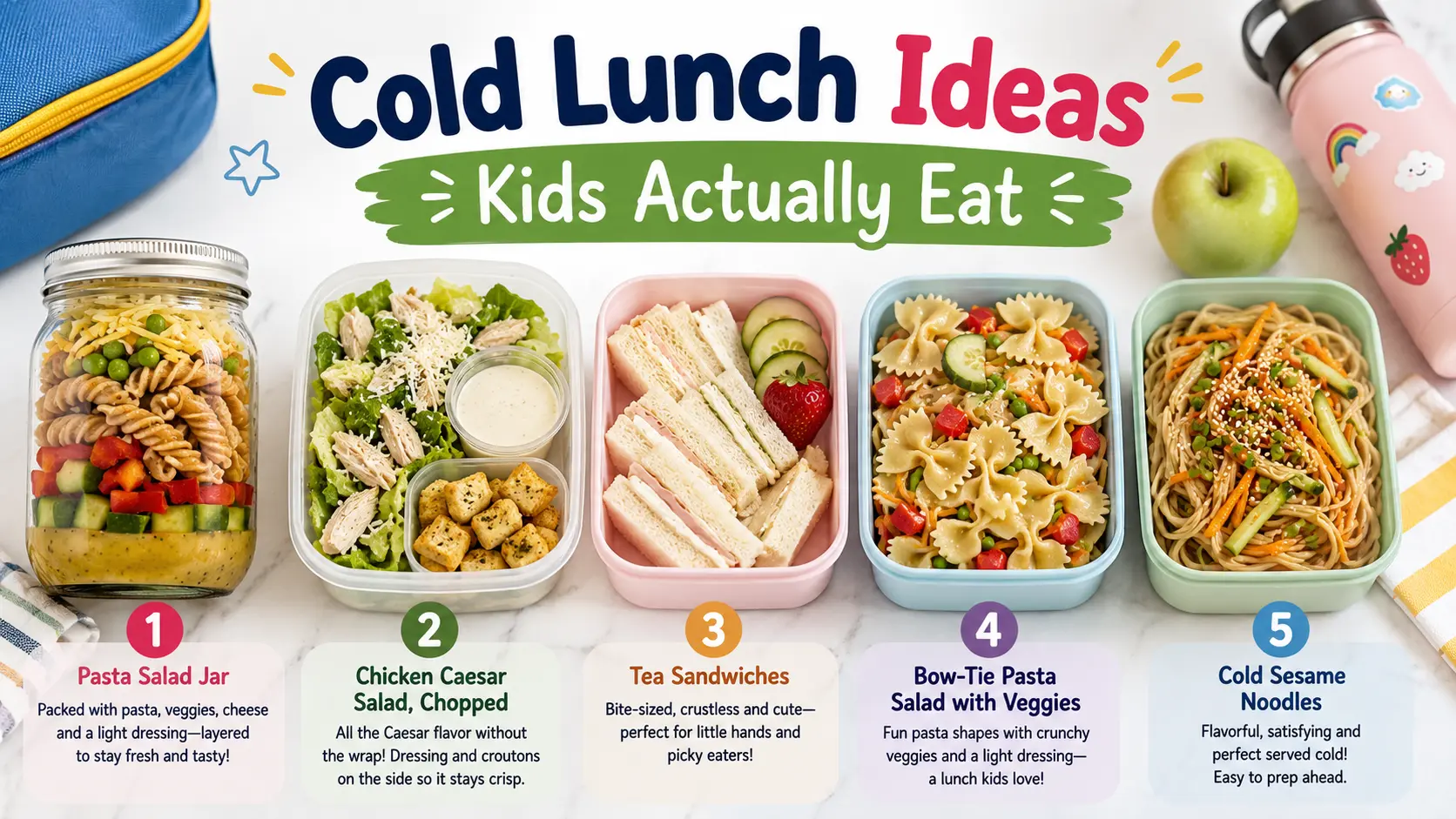
- Pasta Salad Jar: Whole-grain pasta, small chopped veggies like peas or diced bell pepper, shredded cheese, and a light dressing, layered in a jar so the pasta doesn’t get soggy before lunchtime. Cooking a big batch of pasta on Sunday means this comes together in under five minutes on a weekday morning. Kids tend to eat more of this than a plain sandwich, since the variety of textures in one bite keeps it interesting.
- Chicken Caesar Salad Wrap, Chopped: Skip the wrap and serve it chopped in a container with the dressing on the side for dipping, which solves the classic “wrap falls apart by lunchtime” problem. Shredded rotisserie chicken, chopped romaine, a little parmesan, and croutons packed separately (so they stay crunchy) make this feel like a real meal rather than a sad desk salad. It’s also a great way to use up leftover chicken from dinner the night before.
- Tea Sandwiches: Crustless mini sandwiches (turkey, cream cheese, or ham) cut into small triangles or squares using a sharp knife or a cookie cutter. The bite-sized format wins over kids who normally leave the crusts behind, since smaller portions feel less overwhelming and more like a fun snack than a “meal” they’re expected to finish. Packing three or four small sandwiches instead of one large one also gives picky eaters a sense of choice.
- Bow-Tie Pasta Salad with Veggies: A fun pasta shape plus a few finely chopped vegetables like carrots, cucumber, or peas makes this an easy way to sneak in extra nutrients without a fight. A light vinaigrette or a small amount of ranch keeps the pasta from drying out by lunchtime, and the shape itself tends to make pasta salad feel more exciting to kids than penne or rotini. This is also easy to make in a big batch and portion out for three or four lunches at once.
- Cold Sesame Noodles: Cooked noodles tossed with a light soy-sesame dressing, served cold, and made the night before so the flavors have time to soak in. A few thin cucumber matchsticks or shredded carrot add crunch and color without changing the flavor much. This one tends to be a hit with slightly more adventurous eaters, and it reheats fine too if your child’s school allows a thermos.
Wraps & Roll-Ups
Wraps are one of the easiest lunches to customize for different tastes, and they travel well without falling apart if you wrap them tightly in parchment or foil.
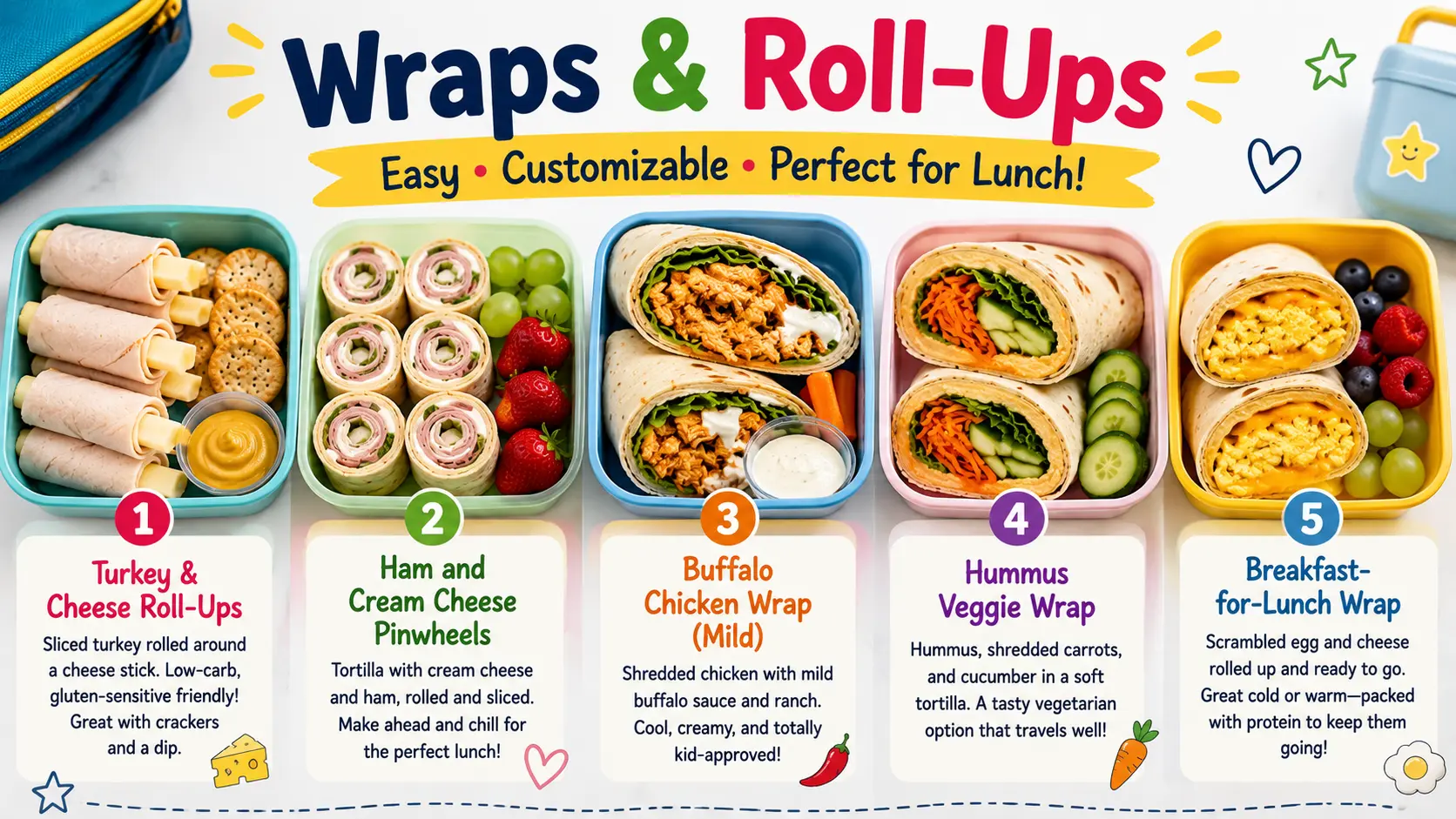
- Turkey & Cheese Roll-Ups: Sliced turkey rolled around a cheese stick, no bread required, which makes this a naturally lower-carb, gluten-sensitive-friendly option. Secure each roll-up with a toothpick (removed before packing, for younger kids) or just slice it in half so it holds its shape in the lunch bag. Pair with a handful of crackers or pretzels on the side if your child wants something to dip the roll-ups into mustard or ranch.
- Ham and Cream Cheese Pinwheels: Spread a tortilla with cream cheese, layer with thin ham slices, roll it up tightly, then slice into pinwheels once the roll has chilled for a few minutes, which helps the slices hold together. These can be made a day ahead and stored in the fridge, so they’re one of the better make-ahead options on this list. A few pinwheels plus some fruit on the side makes a complete, no-fuss lunch.
- Buffalo Chicken Wrap (Mild): A kid-friendly, low-spice version with shredded chicken, a light buffalo sauce drizzle, and ranch dressing to cool it down and keep the heat level manageable. Using a mix of mostly ranch with just a spoonful of buffalo sauce lets you dial the spice up or down depending on how your child handles heat. Shredded lettuce and a little extra cheese round it out into a more filling wrap.
- Hummus Veggie Wrap: Hummus, shredded carrots, and thin cucumber strips rolled into a soft tortilla make for a solid vegetarian option to rotate in a few times a month. Spreading the hummus all the way to the edges of the tortilla helps it act like glue, keeping the vegetables in place when the wrap is sliced. This one travels especially well and doesn’t need to stay cold, which makes it a good pick for field trip days.
- Breakfast-for-Lunch Wrap: Scrambled egg and cheese rolled into a tortilla the night before; it reheats fine in a thermos or eats just as well cold, straight from the fridge. This is a good way to use up extra scrambled eggs from breakfast, and the protein tends to keep kids fuller through the afternoon than a typical sandwich. Add a few crumbles of cooked bacon or a spoonful of salsa if your child likes a little more flavor.
Bento Box & Lunch Box Style Ideas
If your kid eats better when food is separated into small compartments, a bento-style lunch box is worth the investment. These ideas are built for that format.
- Rainbow Bento: Carrot sticks, grapes, strawberries, yellow bell pepper, and cucumber, arranged by color across the compartments of the box. Kids are far more likely to try something new when it’s presented as part of a “rainbow,” since the visual novelty makes even familiar vegetables feel like a game rather than an obligation. Adding one small protein, like a cheese stick or a few cubes of turkey, rounds this out into a full lunch.
- Snack-Style Lunch Box: A mix of crackers, grapes, a hard-boiled egg, and a mini muffin, portioned into small compartments. It feels like snacking, but it adds up to a full, balanced lunch with protein, fiber, and a little something sweet, which tends to work well for kids who prefer grazing over sitting down to a single “main dish.” Batch-boiling eggs on Sunday makes this an especially quick one to pack on a busy morning.
- Dip-and-Dunk Box: Pita wedges, rolled deli meat, and cut vegetables with a small container of hummus or ranch for dipping. Dippable food tends to disappear fast, since the act of dipping itself makes eating feel more like play, which is especially useful for kids who are slow or reluctant eaters at lunchtime. Rotating the dip and the dippers each week (pretzels one day, veggies the next) keeps this format from getting stale.
- Mini Muffin Tin Lunch: Use a small divided container for cheese cubes, fruit, a few crackers, and a couple of olives or pickles for a little briny contrast. This format is especially good for kids who don’t like their foods touching, since every item gets its own space. It also makes it easy to use up small amounts of leftovers, a few grapes here, a spoonful of leftover fruit salad there, without any single item feeling like an afterthought.
Easy School Lunch Ideas for Kids Who Are Picky Eaters
Picky eating at school often looks different than it does at home, new environment, less time, more distractions. These ideas lean familiar, with just enough variety to keep things interesting.
- Build-Your-Own Wrap Station: Pack a soft tortilla, shredded cheese, and a small portion of chicken or turkey separately, so your child assembles it their own way at the table instead of being handed something already put together. Giving a picky eater some control over the final result, how much cheese, whether the meat goes in at all, tends to increase the odds that the lunch gets eaten rather than traded away or tossed. It also turns lunch into a small, low-stakes activity rather than a chore.
- Mini Sandwich Stacks: Use a cookie cutter to make small, fun-shaped sandwiches out of a familiar filling like PB&J, turkey and cheese, or sunbutter and jelly. Smaller portions feel less overwhelming to a hesitant eater than one large sandwich, and cutting off the crusts (saved for breadcrumbs, if you don’t like waste) removes one common point of resistance. Packing two or three small sandwiches instead of one big one also gives a sense of variety without introducing anything unfamiliar.
- Plain Pasta with Butter and Parmesan: Sometimes simple wins, and a small container of buttered pasta with a little parmesan is often the one thing a picky eater will reliably finish. Pack extra veggies or fruit on the side rather than mixing everything together, since combined dishes are frequently the first thing a selective eater rejects. This is a good “safe base” to build slightly more variety around over time, by introducing one new topping at a time.
- “Safe Food” Trio Box: Three foods you already know your child eats without a fight, rotated with one small “new food” on the side, no pressure to eat it, just repeated, low-stakes exposure. Food researchers note that it can take many exposures before a picky eater accepts a new food, so the goal here isn’t for the new item to get eaten every time, just for it to keep showing up. Over weeks, this approach tends to expand what a selective eater is willing to try far more than forcing a new food all at once.
- Quesadilla Triangles: Cheese quesadilla cut into small triangles; eat warm from a thermos or cold, and easy to dip in a mild salsa or a little sour cream if your child likes that. The familiar, melty cheese-and-tortilla combination makes this one of the more universally accepted lunches on this list, even among kids who are cautious about new foods. Adding a small amount of finely diced chicken or black beans inside is an easy way to sneak in extra protein without changing the texture much.
A quick tip for picky eaters: predictability helps more than variety does. A simple weekly theme, “Wrap Wednesday,” “Pasta Friday”, takes the decision-making off your plate and gives your child something to expect.
Healthy Lunch Picks
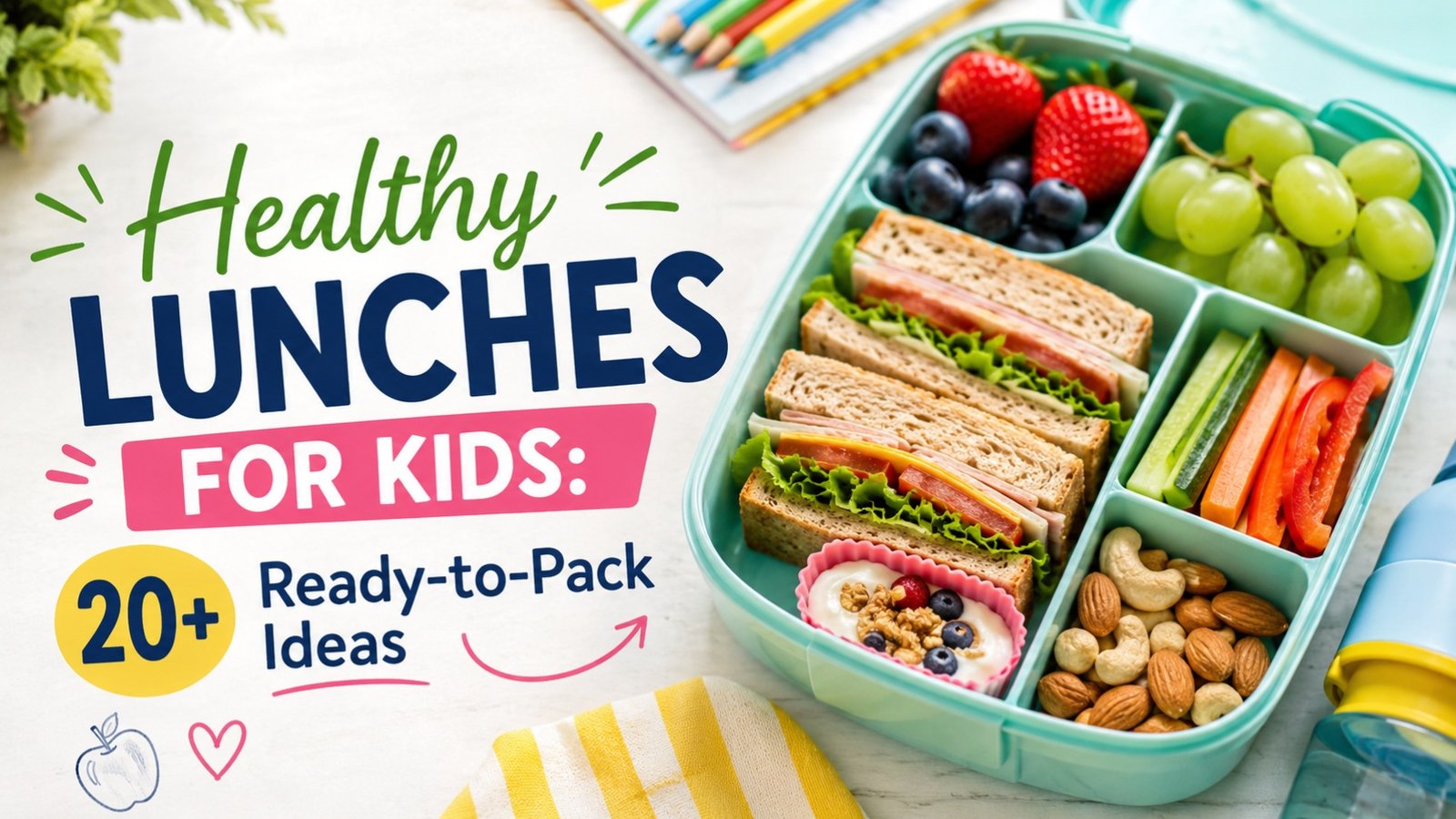
These ideas keep protein, fiber, and produce front and center without sacrificing the “kid-approved” factor. For a full deep-dive on this topic, check out Healthy Lunches for Kids: 20+ Ready-to-Pack Ideas.
- Turkey, Veggie & Hummus Wrap: Whole-wheat tortilla, hummus, turkey, and shredded carrots rolled together for a lunch that covers protein, fiber, and vegetables in one item. Using whole-wheat instead of white tortillas adds meaningful fiber without changing the taste much, and hummus adds plant protein on top of the turkey. This wrap also holds up well overnight in the fridge if you want to prep a few at once for the week.
- Egg Salad on Whole-Grain Bread: A protein-rich classic; add a little Greek yogurt in place of some or all of the mayo for extra protein and a slightly tangier flavor kids often like just as much. Whole-grain bread adds fiber that helps keep energy steady through the afternoon, rather than the quick spike-and-crash of white bread alone. A sprinkle of paprika or a few chopped chives on top makes it feel a little more special without changing the flavor for a picky palate.
- Edamame & Fruit Cup: Shelled edamame (kids love popping them out of the pod, which also slows down eating and makes lunch last longer) with a side of mixed fruit. Edamame is one of the few plant-based proteins that most kids genuinely enjoy on its own, with no dip or sauce required. A light sprinkle of sea salt on the edamame is usually all it needs.
- Homemade Trail Mix: Whole-grain cereal, dried fruit, and sunflower seeds combined for a nut-free crunchy mix that travels well and doesn’t need refrigeration. Making a big batch on the weekend and portioning it into small bags or containers means this becomes a genuinely two-minute lunch addition on weekday mornings. Swap in different dried fruits or cereals every few weeks to keep the mix from getting predictable.
- Overnight Oats Cup: Made the night before with milk (or a milk alternative), oats, and a little fruit, this doubles as a filling, fiber-rich lunch option that’s ready to grab straight from the fridge. A spoonful of nut butter or sunbutter stirred in adds protein and healthy fat, which helps it hold kids over longer than a typical starchy side. This is also one of the few “breakfast” foods that works just as well at lunch, which is handy for kids who like routine.
Lunches Kids Can Help Make Themselves
Getting kids involved in packing their own lunch, even just for one or two items, tends to raise the odds they’ll actually eat it. These are simple enough for a 7- or 8-year-old to help assemble with a little supervision.
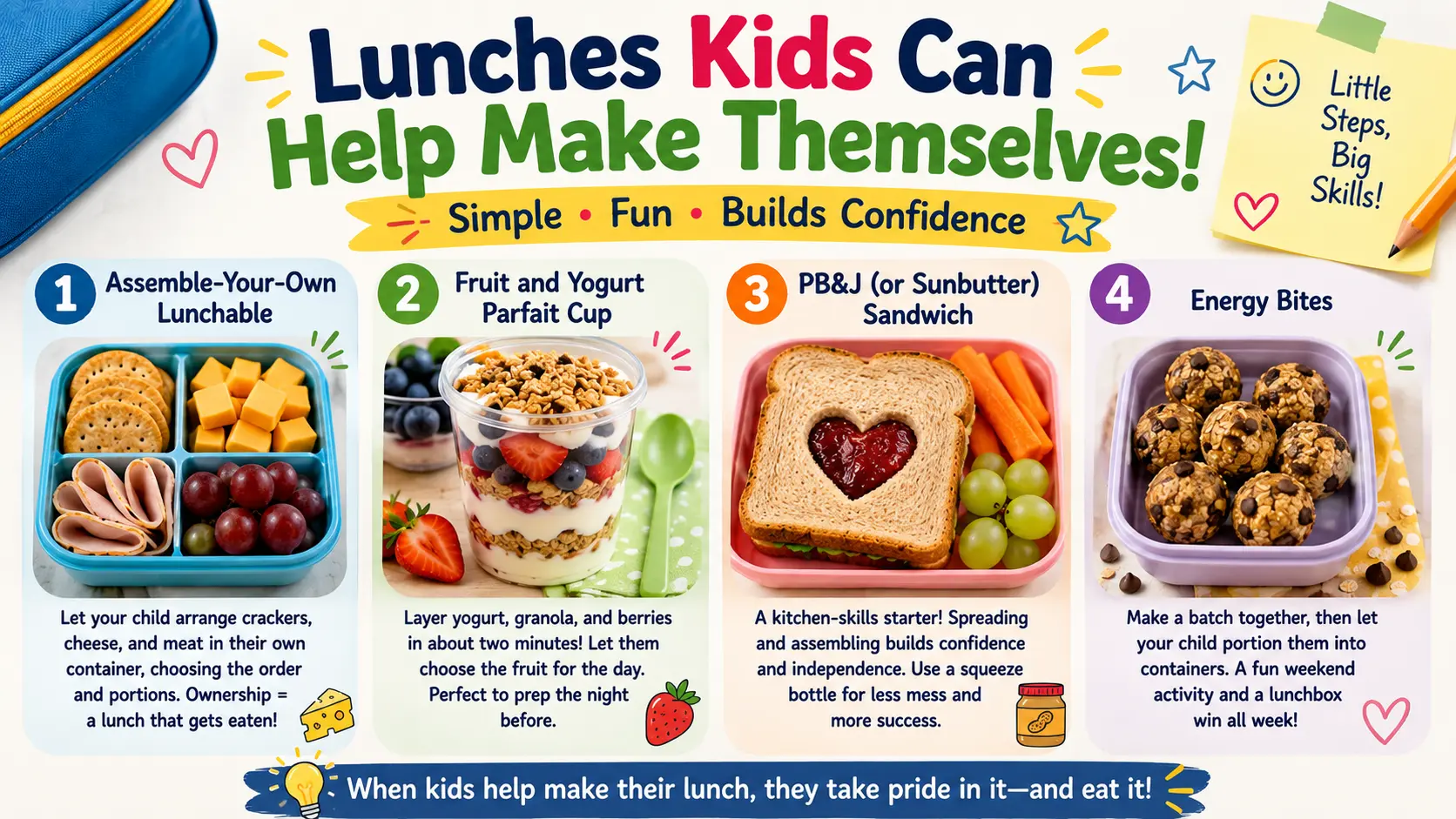
- Assemble-Your-Own Lunchable: Let your child arrange crackers, cheese, and meat in their own container, choosing the order and portions themselves. This small bit of ownership over the process tends to translate into a lunch that actually gets eaten, since kids are far more invested in food they had a hand in preparing. It’s also a low-risk way to start building basic kitchen habits, like washing hands before handling food.
- Fruit and Yogurt Parfait Cup: Older kids can layer yogurt, granola, and berries themselves in about two minutes, which makes this a good “first solo lunch item” for a child just starting to help in the kitchen. Letting them choose the fruit for the day adds a small decision-making moment that most kids enjoy. Doing this the night before means it’s one less thing to manage in the morning rush.
- PB&J (or Sunbutter) Sandwich: A genuine kitchen-skills starter recipe; most kids can spread and assemble this by age 6 or 7 with supervision, using a butter knife and pre-sliced bread. Beyond the practical time savings, letting a child make their own sandwich builds real confidence and a sense of independence around food. Keep the jelly in a squeeze bottle rather than a jar to make spreading easier and less messy for smaller hands.
- Energy Bites: Make a batch together on Sunday (oats, nut butter or sunbutter, honey, and mini chocolate chips, rolled into small balls), and let your child portion them into small containers for the week ahead. This turns lunch prep into a shared weekend activity rather than a daily chore, and kids tend to be proud to eat something they helped make. Store the extras in the fridge or freezer so there’s always a batch ready to grab.
Age-Based Portioning Notes
A kindergartner and a middle schooler need very different amounts of food, even if they’re eating the exact same lunch idea.
- Elementary school (ages 5–10): Focus on smaller, simpler portions, one protein, one grain or starch, one fruit or veggie, and a small treat. Bite-sized and easy-to-open packaging matters most at this age, since lunch periods are often short.
- Middle school and up (ages 11+): Portions should roughly double from elementary sizes, and heartier options, wraps, pasta salads, thermos meals, tend to hold kids over better than snack-style boxes, especially with longer gaps between lunch and after-school activities.
Frequently Asked Questions
What are some easy lunch ideas?
The fastest lunches are usually no-cook ones: a DIY lunchable box, a turkey and cheese roll-up, a yogurt and berry cup, or a hummus and veggie dipper box. Keeping a few of these ingredients on hand at all times means you can put together a full lunch in under five minutes, even on the busiest mornings.
What to give a picky eater for school lunch?
Lean on familiar, simple items rather than combined dishes, a plain turkey sandwich, buttered pasta, or a “safe food” trio box with three items you already know your child eats. Pack any new or unfamiliar food separately and without pressure, so it doesn’t put the rest of the lunch at risk of being skipped.
What are 10 good lunch foods for kids at school?
Turkey and cheese roll-ups, pasta salad, hummus with veggies, a yogurt and berry cup, cheese and crackers, a mild wrap, edamame, a hard-boiled egg, whole-grain crackers, and fresh fruit all tend to be reliable, well-liked staples across most age groups.
What’s a good lazy lunch?
A DIY lunchable box or a cheese-and-cracker stacker box is about as low-effort as school lunches get, both take under five minutes with zero cooking, using ingredients you likely already have on hand. Pre-cutting a batch of cheese and veggies on Sunday makes these even faster to throw together on weekday mornings.
What to make for lunch when nothing sounds good?
On those days, skip trying to invent something new and default to a “snack-style” box instead, a mix of crackers, fruit, cheese, and a protein like a hard-boiled egg or a few slices of deli meat. It doesn’t require a real “recipe,” and the variety of small items usually appeals even when nothing specific sounds appetizing.
What’s a good cold school lunch for a picky eater?
Stick to familiar textures and flavors, a plain turkey and cheese roll-up, a cheese and cracker box, or a simple pasta salad without sauce mixed in are all safe, cold options that don’t require reheating.
What can I pack for lunch besides a sandwich?
Wraps, pasta salad jars, bento-style boxes, quesadilla triangles, and snack-style “mix boxes” (crackers, cheese, fruit, and a protein) are all easy sandwich alternatives that still travel well.
How do I keep school lunches from getting boring?
Rotate through categories instead of individual recipes, a “wrap day,” a “bento day,” a “pasta day”, so the format changes even when the ingredients are similar. It’s far easier to sustain than trying to invent something brand-new every day.
What should teenagers bring for school lunch?
Older kids generally do better with larger, protein-heavy lunches, think a full wrap, a thermos of pasta, or a bigger bento box, since they’re often going straight from lunch into sports or after-school activities without another meal for hours.
Are these lunch ideas easy to make nut-free?
Yes, most of the sandwich and wrap ideas on this list can be made nut-free by swapping peanut butter for sunbutter or soy butter. Always double-check your school’s specific allergy policy, since some schools restrict all nut products, including substitutes made in facilities that also process nuts.
Final Thoughts
You don’t need a new recipe every single day to keep school lunches interesting, you need a rotation. These easy school lunch ideas for kids are meant to be mixed and matched: pick two or three ideas from each category above, keep the ingredients on hand, and you’ll always have something ready to pack, even on the mornings when you’re moving too fast to think.
One Comment