
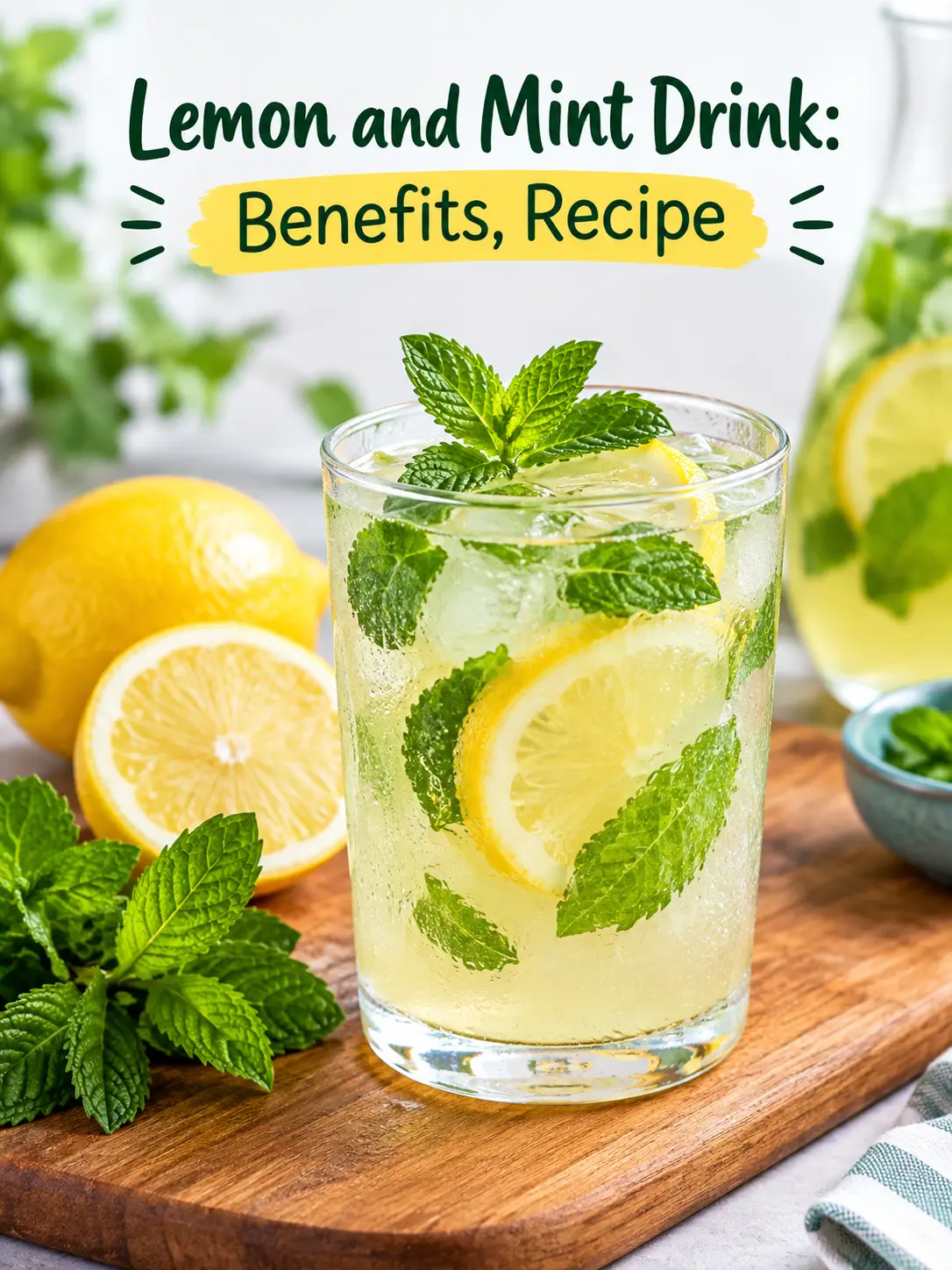
Lemon and Mint Drink: Benefits & Easy Recipe
A lemon and mint drink combines fresh lemon juice, mint leaves, and water into a simple beverage that has been served across the Mediterranean and the Middle East for generations. This article explains what the drink actually is, what its ingredients are known for, and how to make a classic version at home, along with a few common variations and answers to frequent questions.
What Is a Lemon and Mint Drink?
At its core, a lemon and mint drink is exactly what it sounds like: fresh lemon juice and mint leaves combined with water, usually with a small amount of sweetener. It is served cold, often over ice, and is most popular during warmer months.
The name covers more than one style of drink, and the differences matter when following a recipe.
Infused Water vs. Mint Lemonade vs. Blended Juice
Infused water is the lightest version. Lemon slices and mint leaves sit in plain water for a few hours so the flavors gradually transfer. There is little to no added sugar, and the taste is subtle.
Mint lemonade is the sweetened, more concentrated version most people picture when they hear “lemon and mint drink.” Lemon juice, sugar, and mint are combined directly, either stirred together or blended, then diluted with water.
Blended lemon mint juice takes this a step further by putting the mint leaves themselves into a blender along with the lemon juice, sugar, and water. This produces a slightly cloudy, more intensely flavored drink with visible flecks of mint throughout.
Recipes found online sometimes use these three terms interchangeably, which can lead to confusion about how much mint to use or how long the drink needs to sit before serving. The recipe below focuses on the sweetened, blended version, with instructions for the other two included in the variations section.
Lemon Mint Juice Benefits
Lemon and mint are each associated with specific, well-documented properties, and combining them does not create new effects beyond what each ingredient offers on its own.
Vitamin C and Hydration
Lemons are a source of vitamin C, an antioxidant involved in immune function and skin health. A typical serving of this drink, made with the juice of one or two lemons, provides a meaningful portion of a person’s daily vitamin C intake.
Because the drink is mostly water, it also contributes to daily fluid intake in the same way plain water does. This makes it a lower-sugar alternative to soda or bottled juice for people looking to drink more water throughout the day.
Digestive Support from Mint
Mint has long been used to ease digestive discomfort, and its aroma alone is often enough to trigger digestive signals in the body. Menthol, the compound responsible for mint’s cooling sensation, has a mild relaxing effect on the muscles of the digestive tract.
This is part of why mint teas and mint-based drinks are commonly served after meals in many cultures.
Things to Keep in Mind
A few points are worth noting before treating this drink as a health remedy rather than a beverage.
- Acidity and tooth enamel: Lemon juice is acidic, and frequent exposure can gradually wear down tooth enamel over time. Drinking through a straw and rinsing with plain water afterward can reduce this effect.
- Sugar content: The sweetened version of this drink still contains added sugar. Reducing the sugar or switching to the unsweetened infused water variation lowers the overall sugar content significantly.
- No substitute for medical advice: While lemon and mint each have documented properties, this drink is not a treatment for any medical condition, and claims about “detoxing” the body are not supported by clinical evidence. The liver and kidneys handle detoxification on their own.
Lemon and Mint Drink Recipe
This recipe produces a sweetened, blended lemon and mint drink similar to the version served at many Middle Eastern and Mediterranean restaurants. It makes about five cups, enough for four to five servings.
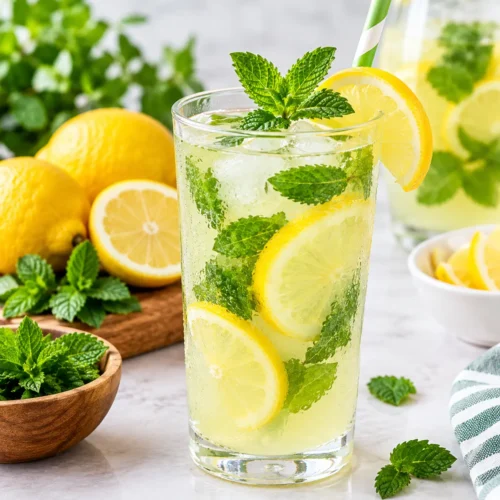
Lemon and Mint Drink
Ingredients
Main
- 6-8 fresh lemons enough for about 1 cup of juice
- 4-5 tbsp granulated sugar adjust to taste
- 4 cups cold water tap or bottled
- 1 cup fresh mint leaves stems removed
For Serving
- ice cubes
- lemon slices optional, for garnish
Instructions
- Cut the lemons in half and juice them until about 1 cup of juice is collected.
- If using a reamer, pour the juice through a fine strainer to remove seeds. The pulp can stay in.
- Remove the mint leaves from their stems, rinse under cold water, and shake off the excess.
- Add the lemon juice, water, sugar, and mint leaves to a blender. Blend on high until smooth and pale green, about 30 to 45 seconds.
- Taste and adjust with more sugar or water as needed.
- Pour over ice and serve, or refrigerate in a covered pitcher until ready to serve.
Notes
- Avoid over-blending the mint, as it can release bitter flavors. Thirty to forty-five seconds on high is usually enough.
- Best consumed within 1 to 2 days for the freshest flavor and color.
- For a sparkling version, replace part of the water with chilled sparkling water added just before serving.
Common Mistakes to Avoid
A few issues come up repeatedly with this recipe, and most are easy to prevent.
- Over-blending the mint. Running the blender for too long, or blending at too high a speed for too long, can release bitter compounds from the mint leaves. Thirty to forty-five seconds on high is usually enough.
- Using old or wilted mint. Mint that has started to wilt or brown has a weaker aroma and can taste slightly off. Fresh, bright green leaves give the clearest flavor.
- Skipping the taste test. Lemons vary widely in tartness and juice content, so a fixed measurement does not always produce the same result. Tasting before serving and adjusting sugar or water accordingly solves this.
- Adding ice before blending. Ice dilutes the drink and waters down the flavor if added during blending. It is better added to individual glasses right before serving.
Variations
The base recipe above can be adjusted in several directions depending on preference or dietary needs.
Sugar-Free or Honey-Sweetened Version
Replacing granulated sugar with honey, maple syrup, or a sugar substitute such as stevia works well in this recipe. Honey adds a mild floral note, while stevia or monk fruit sweeteners keep the drink lower in sugar without changing the flavor as much.
For the unsweetened infused water version, skip the sweetener and blending step entirely. Instead, add lemon slices and lightly bruised mint leaves to a pitcher of water and refrigerate for at least two hours before serving.
Sparkling Lemon and Mint Drink
Replacing part of the water with chilled sparkling water creates a fizzy version of the drink. This works best when the sparkling water is added just before serving, rather than during blending or chilling, so the bubbles are not lost.
Iced or Slushie-Style Version
Blending the finished drink with a generous amount of ice, rather than pouring it over ice afterward, produces a thicker, slushie-like texture. This version is closer to the limonana style served in parts of the Middle East and is best made in smaller batches, since it does not keep well once blended with ice.
Storage and Shelf Life
The blended version of this drink is best consumed within one to two days. Because fresh mint is blended directly into the liquid, the color and flavor shift the longer it sits, and the mint can start to taste slightly bitter after the first day.
Store it in a covered pitcher or airtight container in the refrigerator. Give it a quick stir before serving, since some settling is normal.
The infused water version keeps slightly longer, generally two to three days, since the mint and lemon are left whole rather than blended. The flavor becomes milder over time as the ingredients are used, so many people simply refill the pitcher with fresh water once or twice before starting a new batch.
Troubleshooting
The drink tastes bitter. This is almost always caused by over-blending the mint or letting the blended drink sit for more than two days. Reducing blending time or making a fresh batch resolves it.
The drink is too tart. Add a small amount of additional sugar or honey, one tablespoon at a time, tasting between additions. Diluting with a bit more water also softens tartness without adding sweetness.
The drink separates or looks cloudy. Some separation is normal, since the mixture contains lemon pulp and blended mint. A quick stir before serving redistributes everything evenly.
The mint turns brown after a day or two. This is a natural oxidation process and does not indicate spoilage on its own, though the flavor and appearance are better within the first 24 hours. Using fresh mint leaves and mint sprigs rather than blended mint in the infused water version slows this discoloration.
Frequently Asked Questions
What is the best time of day to drink a lemon and mint drink?
There is no specific time required. Many people prepare it in the morning as part of a hydration routine, though it can be served any time of day, particularly during warm weather.
How long does a lemon and mint drink last in the fridge?
The blended version lasts one to two days in a sealed container in the refrigerator. The infused water version, made with whole mint and lemon slices rather than blended, lasts two to three days.
Can this drink be made ahead for a party or gathering?
Yes. It can be made several hours in advance and kept chilled in a covered pitcher. For the best flavor and appearance, add fresh mint sprigs and lemon slices for garnish just before serving, since blended mint that sits for many hours can look less vibrant.
Can dried mint be used instead of fresh mint?
Fresh mint is recommended for this recipe, since it provides both flavor and aroma that dried mint cannot replicate in a cold drink. Dried mint can be used in a pinch, but the result will taste noticeably milder.
Does this drink help with weight loss?
There is no clinical evidence that lemon and mint drinks cause weight loss on their own. Replacing a higher-sugar beverage, such as soda or sweetened juice, with a lower-sugar version of this drink can support a reduced-calorie diet as part of an overall eating pattern, but the drink itself does not have a direct fat-burning effect.
Can lime be used instead of lemon?
Yes. Lime produces a slightly less tart, more floral result. Limes generally yield less juice than lemons, so more limes are needed to reach the same amount of juice called for in the recipe.
Check Out More: